Building Confidence Through Hands-On Learning: Zlata Honchar's Brilliant Blue Journey
A starfish-shaped invention helped Zlata Honchar turn her passion for coding and marine conservation into an award-winning project. Through the Brilliant Blue Challenge, she gained confidence, discovered her career path, and found inspiration to make a difference.
Finding a dependable career pathway that aligns with one’s interests is often difficult for high school students, even for those set on fields like computer science. For Zlata Honchar, that uncertainty began to shift when she participated in the Brilliant Blue Challenge, where a starfish-shaped device helped turn a personal interest in coding into a clear academic and career direction.
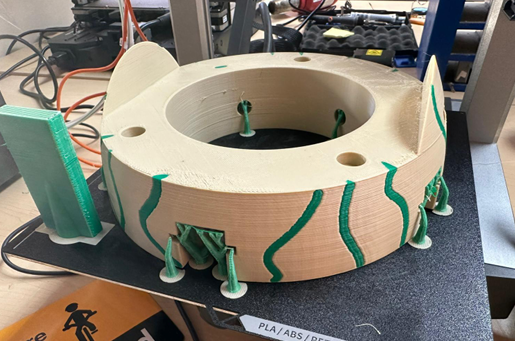
Zlata Honchar is currently a first-year university student studying computer science at Western University, however a year ago she was living a completely different life working with her team Scotia Stellar Systems on their project for Brilliant Blue: Starfish Sensor Systems and Starfish Planting Matrix. Their undertaking focused on creating a device in the shape of a starfish to help protect and grow marine life by using sensors to monitor the aquatic environment and make informed decisions about conservation strategies towards the health of these environments.
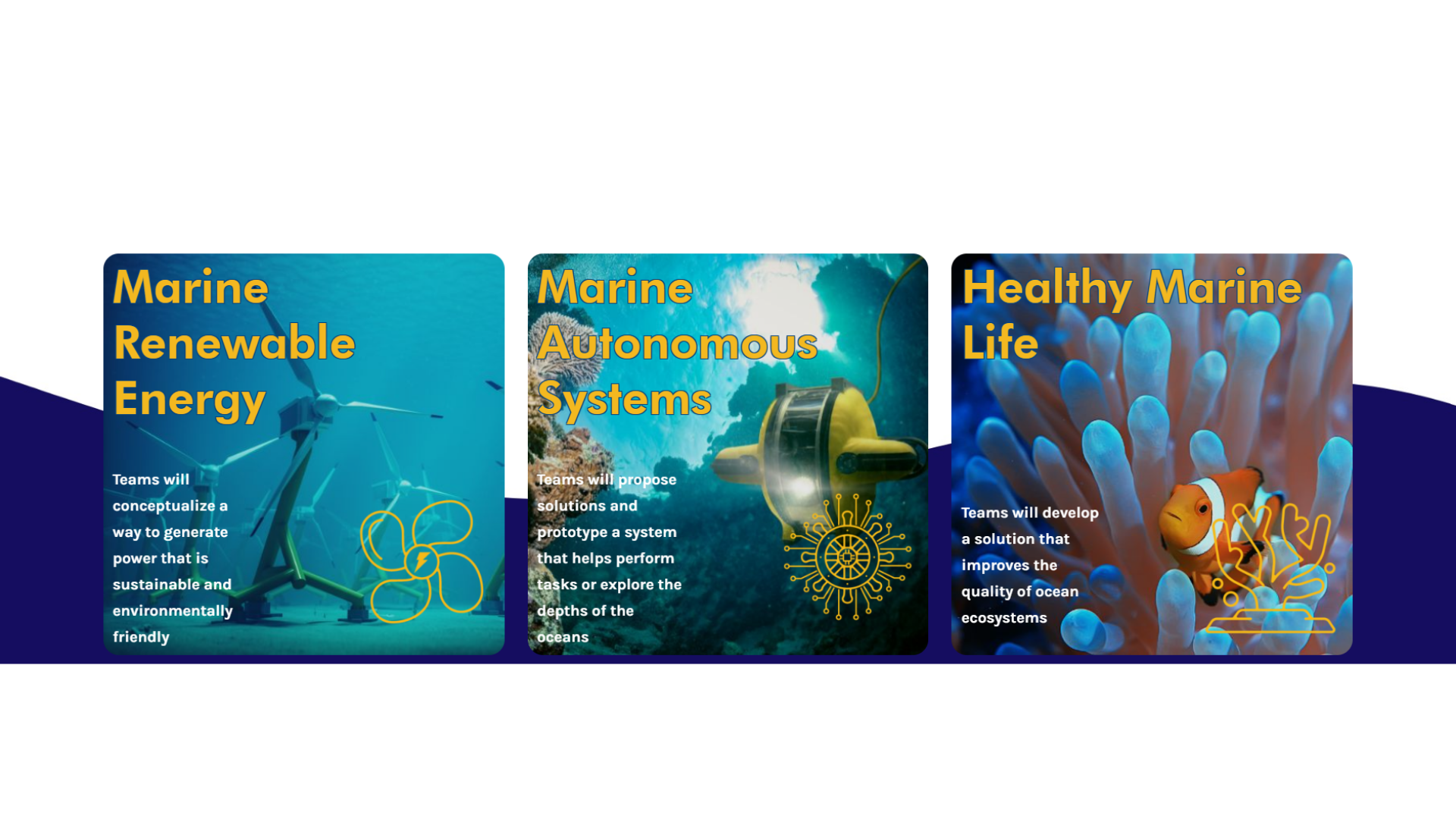
This topic strongly aligns with the values of the Brilliant Blue Challenge, which emphasize sustainable ocean solutions and opportunities for youth. The competition is open to students aged 12-18 with a passion for protecting and improving marine life conditions, where each project must correspond to one of the three categories: Marine Renewable Energy, Marine Autonomous Systems, and Healthy Marine Life. As aquatic ecosystems face increasing threats, it’s imperative that projects like Honchar’s continue to be explored.
With a life-long passion for marine life, it only made sense for Zlata Honchar to choose the Starfish Sensor System as her project. This, combined with the realization that previous generations had not put enough effort into protecting the environment, are what motivated her to participate in the Brilliant Blue challenge. In addition, Honchar wished to inspire younger people to engage in improving the world, especially in terms of marine conservation.
Specifically, Honchar and her team were motivated towards conservation of the aquatic plant eelgrass that grows in shallow coastal waters and plays a critical role in ocean ecosystems. The underwater grass acts as a habitat for many marine species but it also benefits a much larger scale by storing up to 18 percent of the world’s oceanic carbon dioxide in a process known as “blue carbon.” Unfortunately, seagrasses are amongst the nearshore ecosystems that experience the highest loss globally. According to the United Nations Environment Programme, “almost 30 per cent of global seagrass area has been lost since the late nineteenth century.”
It was in May 2024 when Honchar and her teammate, Kaelyn Simpson discovered the opportunity to register for the challenge through their high school, and for the next five months they would develop their idea, build the device, and prepare for the competition alongside two other teammates. Zlata mentioned that she took charge of the coding aspects of the project, as she had previously worked with coding on her own time, however it was while working on this project that she explored further into the possibilities of coding and learned how her hobby could be applied practically.

A further responsibility Honchar managed while working on this project was the role of student team leader. To create a functional design, a cohesive team is necessary. Each member of the team provided different strengths and weaknesses, and delegating tasks was one of Scotia Steller System’s initial challenges.
“Truly understanding what everyone was good at really helped,” Honchar responded when asked about any unexpected obstacles encountered. “This is how we should approach the project. This is how we should delegate our time.”
As the project progressed, the team was able to successfully navigate their social dynamics, with their friendship even becoming one of Zlata’s favourite memories from the experience.
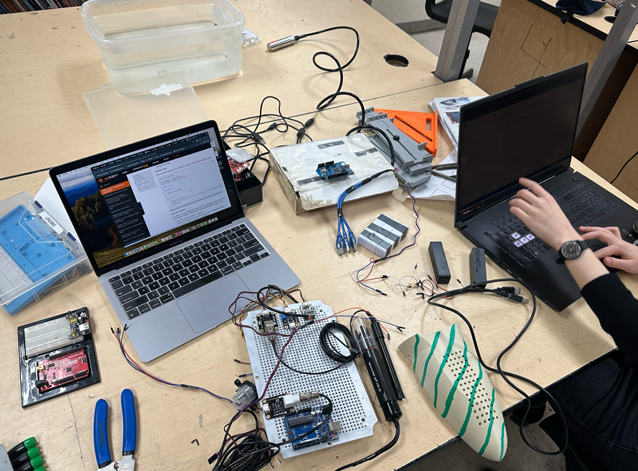
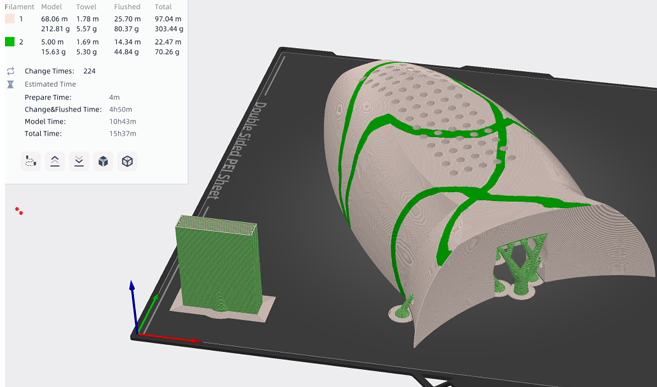
Scotia Stellar Systems working on their project as a team.
“Grace speaks a lot about your character, so try to make friends everywhere. As we start to chase our goals, we slowly start forgetting that we live in a society. We live in groups, and having friends that you make in random places and being able to see each other from time to time is what makes it great. Why not live life like you only have lived it once, and make good memories along the way?” - Zlata Honchar
After completing the Brilliant Blue Challenge and securing second place with Scotia Stellar Systems, Zlata Honchar moved across the country to study computer science, although she experienced moments of self-doubt, like many young people choosing a career path. When looking at the university program ahead of her, she wondered, “will I be able to develop a career out of this?” considering the currently changing job market. But after applying her talents during Brilliant Blue and seeing them turned into a truly impactful project, Honchar’s pathway decisions were very much validated.
“If I didn’t do this competition,” she said, “if I didn’t see the growth and what I’m capable of with my limited knowledge and seeing the scale of impact I can have, I don’t think I would have the confidence of entering my degree to pursue a career path.” - Zlata Honchar
She mentioned more specifically that the hands-on opportunity Brilliant Blue provided her grade 12-self with greatly increased her confidence.
“When you’re in high school, your knowledge is limited to the textbooks. This whole experience made me realize I really love the building work.”

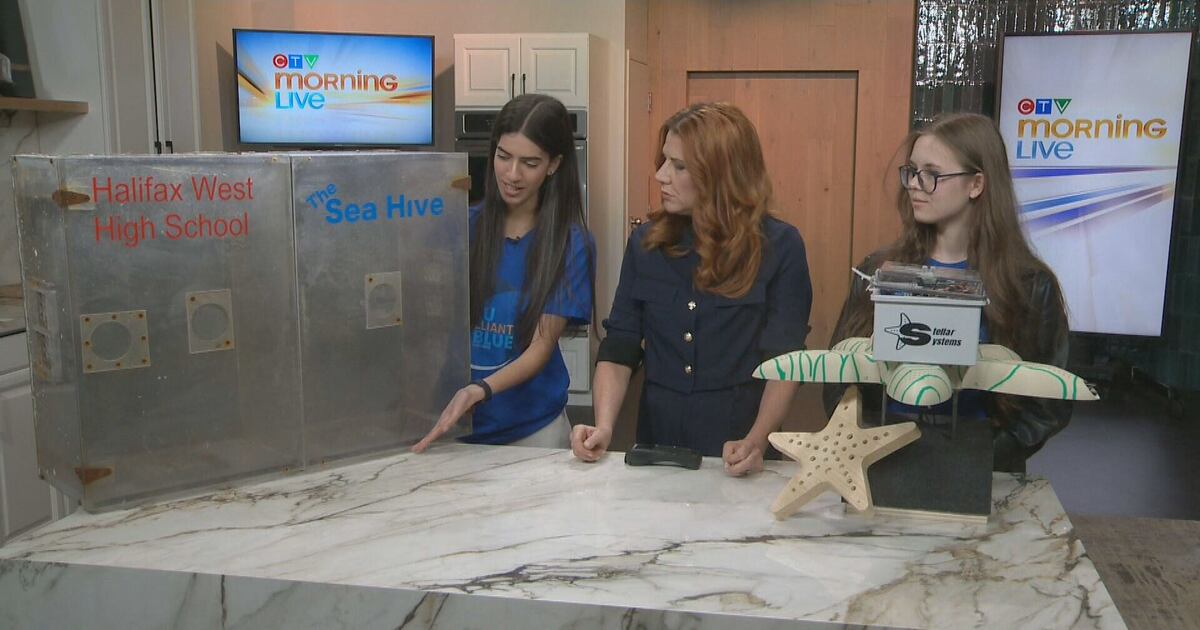
A year after the challenge concluded, Zlata is flourishing at Western University. She is an executive in the Women in Technology Society and the Computer Science Undergrad Society, as well as being involved with a mentorship program, teaching workshops, participating in hackathons where she has developed innovative projects such as an augmented reality assistant and a health-based biometric system.
Honchar’s experience with the Brilliant Blue Challenge highlights how taking initiative to go beyond the classroom and to apply existing skills in new ways can shape a student’s confidence and future. Reflecting on her journey, she encourages others to participle in the challenge and take similar opportunities, even if they feel uncertain at first.
“Always stay true to yourself and what you want,” she said, “the competition will be what you make out of it. It’s what you put in; if you don’t put in a lot of effort, don’t expect to get a lot of results out of it. But that doesn’t mean that you should be stressing yourself over the fact that you haven’t done a lot. The fact that you’re trying, you’re problem-solving, and trying to identify issues in the world are what matter.”
As more students face the pressure of choosing a career path, experiences like the Brilliant Blue Challenge and stories like Zlata Honchar’s demonstrate that confidence is shown most often not before taking action, but because of it.

About the Author – Audrey Lisik
Audrey Lisik is a student at St. Malachy’s Memorial High School in Saint John, New Brunswick, where she serves as a leader on the Yearbook Committee and is working to establish a student newspaper. A passionate violinist and aspiring journalist, Audrey enjoys sharing stories that celebrate innovation, community impact, and the achievements of young people.
This past spring, Audrey volunteered with Brilliant Labs Magazine and the Brilliant Blue Canada National Competition, supporting event photography and interviewing student teams to help capture the creativity, dedication, and accomplishments of young innovators from across the country. Through her writing, she hopes to inspire others by sharing meaningful stories and giving youth a platform to be heard.
Audrey plans to pursue a career in journalism, combining her love of storytelling, research, and connecting with people to inform and engage future audiences.