The Cost of Intelligence: AI, Energy, and the Path to Sustainability
Data centres power the modern internet, but their growing demand for electricity and water is under scrutiny. As AI drives demand higher, the industry must rethink cooling and its environmental cost.

The Cost of Intelligence
By Cassidy Cole, Co-op Student
The climate surrounding generative AI, a type of artificial intelligence that creates new content such as text, images, video, or code based on patterns learned from large datasets, raises many ethical and environmental concerns. At the same time, it brings significant opportunities, including automation, technological progress, and major advancements in areas such as cancer research, where measurable progress has already been made. The debate surrounding generative AI reflects this tension between innovation and responsibility.
Even still, generative AI uses immense amounts of energy, and where data centers stand, average people pay. Such issues, and those regarding water usage leave the situation at a deadlock, where there are many benefits to generative AI, but also many other downsides. In the run of a day, large AI data centers can use up to five million gallons (approximately 19 million litres) of water per day according to the Environmental and Energy Study Institute (EESI ), and consume 460 terawatt-hours of energy in 2022 according to the Canadian Energy Regulator. These numbers raise high concerns, and questions on whether or not we can truly sustain generative AI, and though the outlook might seem bleak, future strategies can mitigate the impact greatly. This article aims to highlight these very issues with generative AI, and propose strategies to mitigate the impact of generative AI.
The first of these concerns comes not from its tangible effects on the environment, but rather the ethical concerns. Generative AI, specifically the kinds that generate images and videos can be used for many malicious purposes: particularly those surrounding deepfakes, but there are many other concerns regarding artistic integrity. To navigate these concerns requires laws to catch up to the times. With how new generative AI is, there are few protections in place against creating such deepfakes, and those that are in place exist as broad, all encompassing laws and regulations. Without specific legal protections put in place surrounding deepfakes, many loopholes can and will be found, loopholes which could lead to major consequences. Once the law catches up to the technology, and the right steps are taken, people may be at ease with many of the ethical concerns surrounding generative AI that don't revolve around its material impacts.
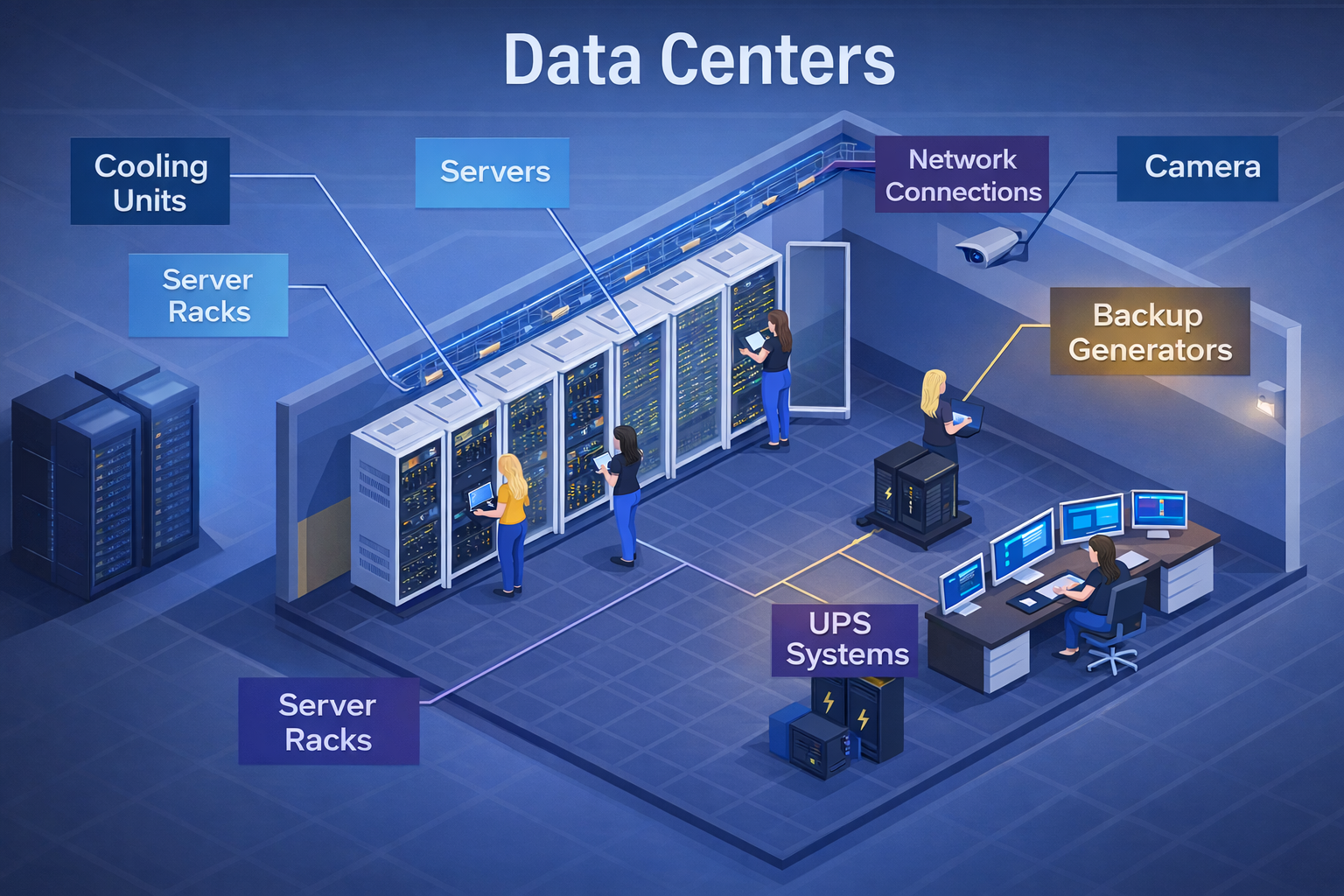
The material effects generative AI has on the environment and people in general is another major concern, the issues revolving around water usage is one of the most commonly known issues, there are also concerns revolving around the usage of power. Water is used to cool the data centers, power is used to fuel the computers so that responses to prompts can be made. The concerns of these intersect both ethical and material issues; the fact that it’s taking power and water from those who need it means that generative AI is simultaneously harming the environment and taking necessary resources from average people. Adequately addressing this problem requires significant research, especially on the front of energy usage, so that more efficient hardware can be made and implemented.
Though there are many concerns surrounding generative AI, there seems to be very few solutions put forth, and with such complex problems, this is to be expected. The ethical issues surrounding deepfakes and artistic integrity are issues rooted in the way generative AI is used, as well as the systemic problem of how these models are made. With people passing off AI images, writing, videos and audio as theirs, there reaches the issue of artistic integrity, and whether or not this counts as blatant plagiarism is a matter which has been discussed and decided upon in academic spaces, with a general consensus being that it is plagiarism. Plagiarism though, is not properly enforceable through law, and it’s only copyright law which can be used to enforce certain things, copyright isn’t nearly close to an all encompassing fix; because of this it’s important to move forward thinking of ways to keep generative AI working for people, and not acting in a way which could move to replace artists.
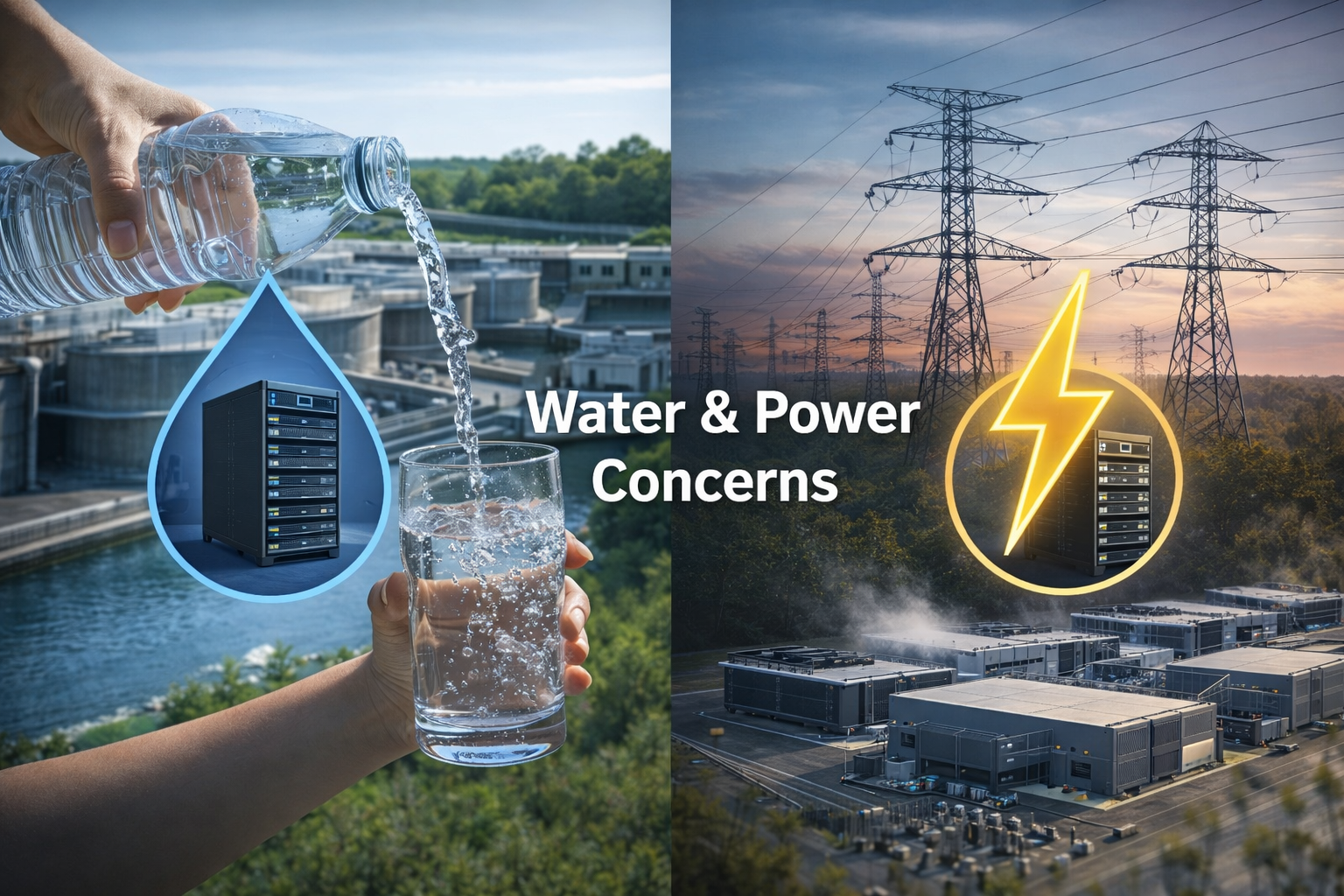
The environmental issue is two fold, with both water and power being major concerns which require different plans of action. When looking at the water issue there are layers of nuance: not all water used is potable, or straight from drinking water supplies, but even still a sizable amount of it is. The water issue mostly just boils down to using as little potable water, and in general as little water as possible. To do this one of two things must be achieved, either remove water from the equation entirely, or make the loop of water usage so closed that what it actually takes is a negligible one time cost. Neither has a particularly high chance of happening in the near future, the tech just isn’t there yet, but even still there are plenty of considerations, some of which may be very feasible.
The first and most obvious of these solutions, is just to keep improving on the processes we have already in place so that they can use less water, and reuse more water. Such a process is one that would have to be let to happen, it’s a more gradual process of innovation within the established system. This also goes for power usage too, the thought being that as we improve technology efficiency can and will follow. A major flaw with the plan is that it relies on the notion that progress will lead towards more sustainability, and though that is a safe bet, it’s a bet nonetheless.
The next approach has its own merits, though it has drastic costs, putting data centers under the water. The idea of this is one Microsoft has explored with their Project Natick, the results of which show that underwater data centers are an environmentally feasible solution. The idea behind this solution is to let the surrounding water cool the data center without having to use any fresh water. This could, in theory, almost completely solve the issue, but there are a few heavy strings attached which halt this from being a complete solution. There would be great costs to this, regardless of the method the approach is implemented. To simply uproot every single data center to move them to the deep ocean would take immense time and money: not only that but the processes of creating the sealed chamber, and transport would involve a hefty environmental cost, one that the more environmentally friendly data centers may not offset for many years to come.
There are also considerations regarding the overall environmental impact, placing so many data centers underwater could have its own negative effects on the ecology of the sea/ocean the data center is placed in. It’s important to take into account that one data center has proven to not have a harmful effect to the environment, the concern would rather come along when many data centers are placed in the same general area. This is an issue that can be fixed, but it’s a consideration that must be taken into account, especially considering most of the data available is only from one data center submerged into the ocean.
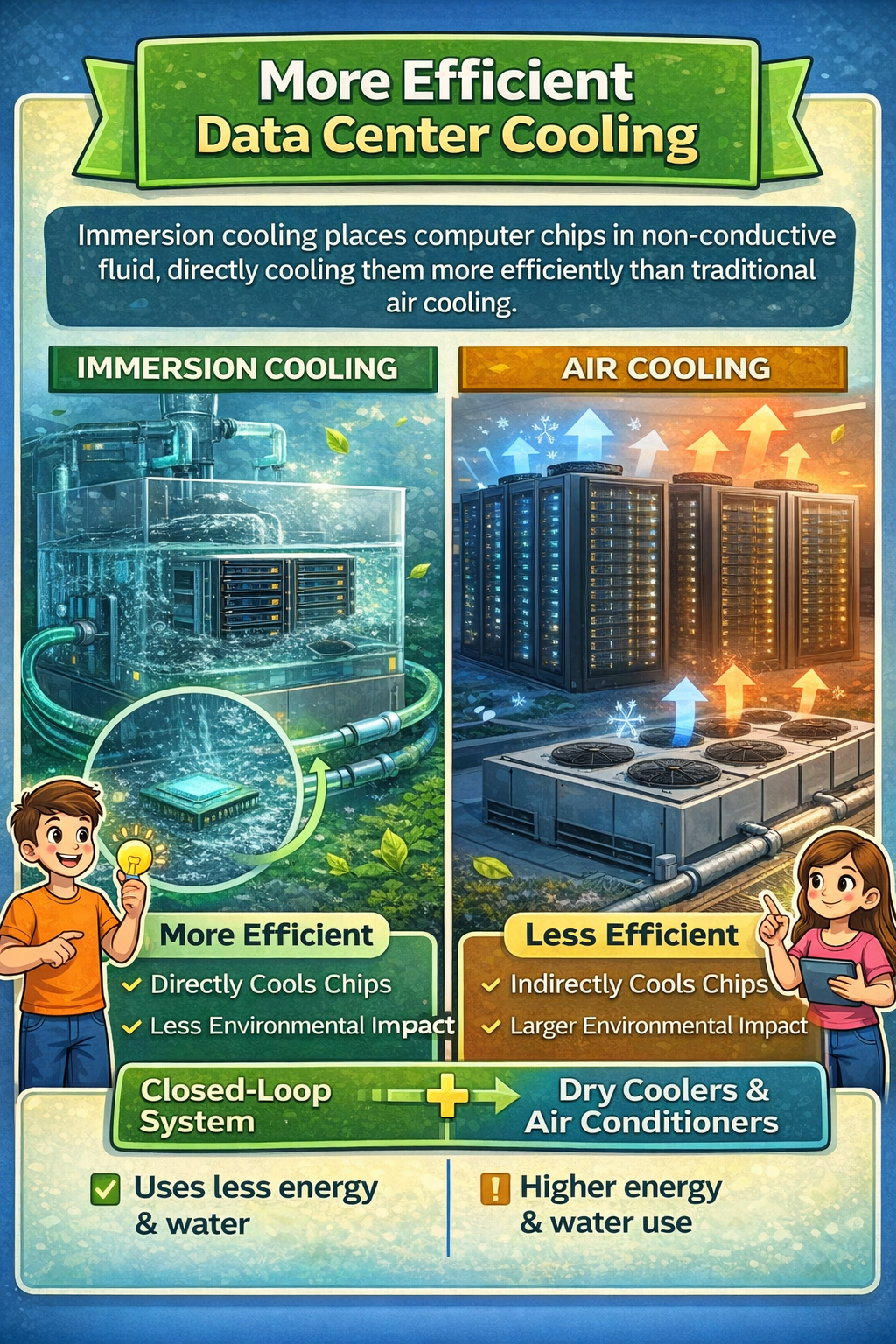
Exploring other, more efficient methods of cooling, including methods like immersion cooling, and amounts of air cooling can be helpful things to implement in the effort of making data centers as environmentally friendly as possible. Immersion cooling is a method of cooling where a chip is placed in a non conductive fluid which directly cools the chip. This allows for direct cooling of chips, which is more efficient than the traditional way of liquid cooling, the higher efficiency meaning less material has to be used, resulting in a lower environmental effect, and according to Forbes immersion cooling is an approach which will reduce environmental harm. This solution is one of the easier ones to implement, considering it’s the only solution which doesn’t require drastic change in the culture around AI, or the uprooting of the infrastructure, but rather only a change in systems. Immersion cooling can also lead to a more closed loop system, leading to less overall consumption, and leading to less costs for companies, which is in their best interests.
In a 2024 Market Snapshot by the Canadian Energy Regulator, Canadian data centers were adopting advanced waste recovery technologies, the QScale Q01 data center in Levis, Quebec predicted to redistribute nearly 100MW of energy from waste heat at that time. QScale’s own website supports this, with the QScale Q01 data center not only leveraging the cold climate for free cooling up to 80% of the year, and using waste heat for sustainable initiatives. This just goes to prove that not only are there valid methods of reducing energy and water usage through smart placement of centers, but there are also people who are willing to. It’s these sorts of people who move to create these kinds of data centers that are needed to move the needle of generative AI’s environmental impact in a positive direction.
As generative AI currently stands, it has the potential to be a destructive force, or one which can lift people up with immense contributions to fields which require immense research, and automation in mundane tasks which can easily be replaced by an artificial intelligence. Making generative AI more sustainable by pushing the decision makers to focus on sustainability and ethical training, and purposes of AI models is critical to lifting society up. As with all innovative technologies and products, application must be handled with care, with a level of restraint, and with as full of an understanding of the impacts the technology might have, along constantly seeking to refine the technology into its best form. With these ideas in mind one can not only be open to innovation, but also hold a level of skepticism necessary to not blindly adopt a possibly ineffectual, or even harmful systems which incorporate the technology. Though it is abundantly clear how much of a vast impact AI has on the environment, as well as on academic and creative spaces, as people guide AI toward the future, they must focus on sustainability and ethicality, or risk seeing AI do more harm than it does good.
About The Author
Evan Cole is a Grade 11 student at Sackville High School in Halifax, Nova Scotia. As a Brilliant Labs Magazine Co-op student, Evan is passionate about exploring emerging technologies and their impact on society and the environment. He enjoys researching complex topics like artificial intelligence and sustainability, and translating them into accessible, engaging content for young readers.
Brilliant Labs offers hands-on co-op placements for high school students interested in technology and creative innovation, including:
• Artificial Intelligence
• Cyber Security
• Graphic Design
• Animation
• Digital Media & Communications
• Sustainability & Emerging Technologies
Students gain real-world experience while contributing to meaningful projects.
Sources
- Environmental and Energy Study Institute (EESI). Data Centers and Water Consumption. eesi.org/articles/view/data-centers-and-water-consumption
- Canadian Energy Regulator. Market Snapshot: Energy Demand from Data Centers is Steadily Increasing, and AI Development is a Significant Factor. October 2024. cer-rec.gc.ca
- Microsoft Research. Project Natick: Underwater Data Centres. Note: Project Natick was confirmed inactive in 2024. natick.research.microsoft.com
- Geary, Bill. Forbes Technology Council. The Power of Liquid Immersion Cooling Technology. Note: This is an industry contributor piece, not an editorial Forbes article. forbes.com/councils/forbestechcouncil
- QScale. Q01 Campus: Sustainability Initiatives. Lévis, Quebec. qscale.com/q01-campus
- Microsoft / Nature. Lifecycle Assessment of Data Centre Cooling Technologies. nature.com/articles/s41586-025-08832-3
- Microsoft Newsroom. Microsoft Quantifies Environmental Impacts of Data Centre Cooling. news.microsoft.com/source/features/sustainability/microsoft-quantifies-environmental-impacts-of-datacenter-cooling
- Data Centre Dynamics. Microsoft Study Finds Liquid Cooling Can Cut Data Centre Emissions by up to 21%. datacenterdynamics.com